


TENS Machines for Home Use
Overview: What are TENS and EMS?
TENS and EMS machines are compact electronic devices designed for home use to help manage pain,
relax muscles, or support muscle activation. They are used by athletes, office workers,
older adults, and many everyday users. This guide explains how each technology works,
how they differ, step-by-step usage, electrode placement tips, safety precautions, maintenance,
and common questions buyers search for.
What Is a TENS Machine?
TENS stands for Transcutaneous Electrical Nerve Stimulation. A TENS machine sends
low-voltage electrical impulses through the skin using adhesive electrode pads. These impulses
stimulate nerves in the targeted area.
How TENS Works
The electrical signals produced by a TENS device are designed to:
- Interfere with pain signals traveling to the brain
- Encourage release of endorphins, the body’s natural pain-relieving chemicals
TENS does not treat the underlying cause of pain, but it can help reduce the sensation of pain
and improve comfort during daily activities.
Common Uses of TENS
- Lower back pain
- Neck and shoulder tension
- Knee and joint discomfort
- Muscle soreness after physical activity
- General aches related to posture or repetitive strain
What Is an EMS Machine?
EMS stands for Electrical Muscle Stimulation. While EMS devices look similar to
TENS machines, their purpose is different.
How EMS Works
EMS sends electrical pulses directly to muscles, causing them to contract and relax. These contractions
mimic natural movement though they are externally triggered.
Common Uses of EMS
- Muscle activation and re-education
- Support during rehabilitation
- Improving muscle engagement
- Reducing muscle stiffness
- Supporting recovery after exercise
EMS is often used alongside physical therapy or fitness routines, not as a replacement for exercise.
TENS vs EMS
Understanding the Difference
Many home devices combine both technologies. It helps to understand the core differences so you can
choose the right mode for your goals.
Purpose
TENS: Focuses on pain relief.
EMS: Focuses on muscle stimulation.
Sensation
TENS: Tingling or buzzing sensation.
EMS: Visible muscle contractions.
When to Use Each
- Use TENS mode for pain, soreness, and muscle tension relief.
- Use EMS mode for muscle activation, rehabilitation support, and recovery work.
Modern home units let you switch between modes easily, making them versatile for different needs.

Benefits of Using a TENS and EMS Machine at Home
- Drug-free pain management
- Portable and easy to use
- Adjustable intensity and modes
- Suitable for many body areas
- Convenient for use while relaxing at home
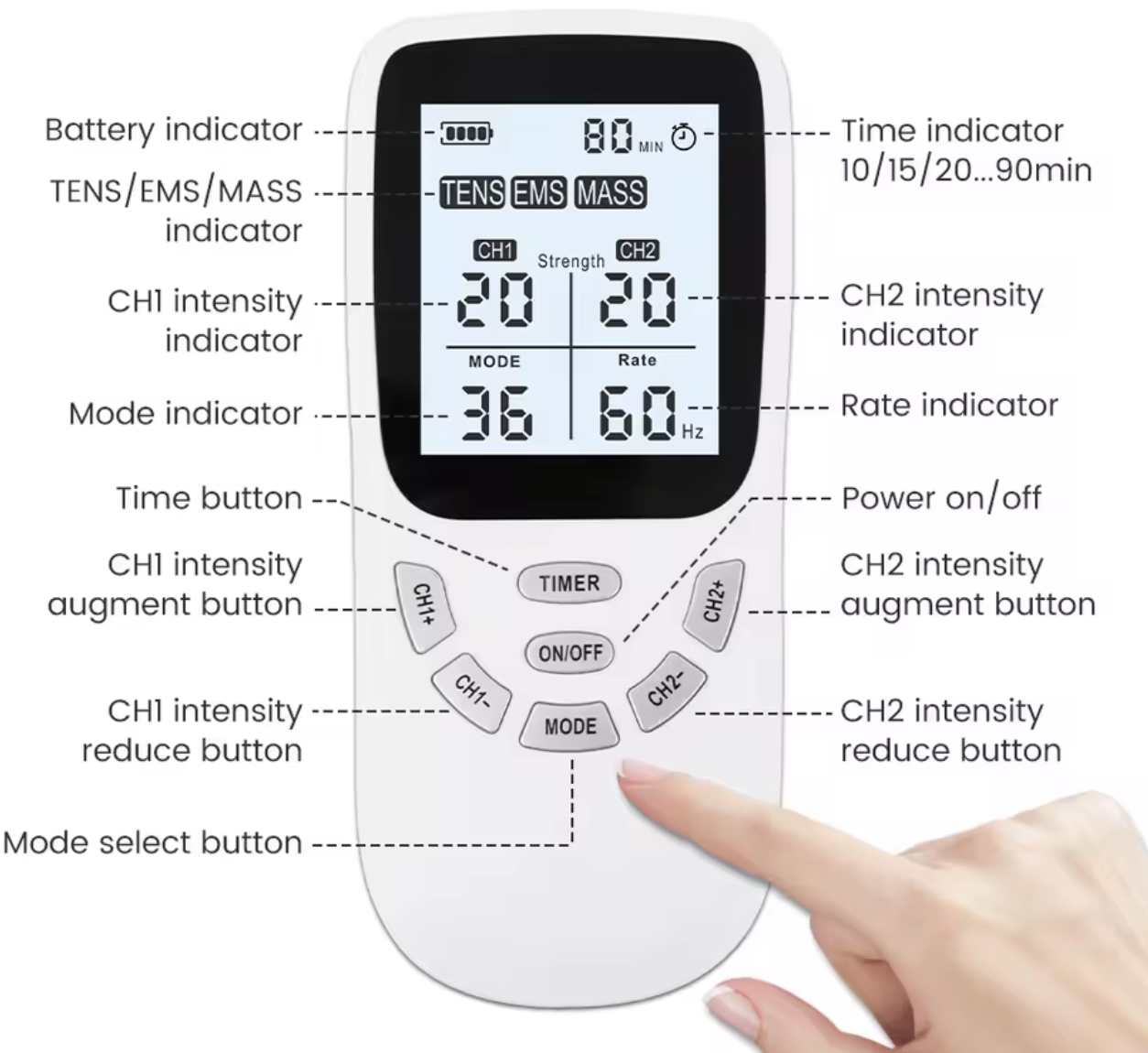
Key Features of a Quality Home TENS EMS Device
Multiple Modes
A good device includes preset programs like massage, pulse, knead, or strengthen.
Adjustable Intensity
Gradual intensity control helps users find a comfortable level.
Dual Channels
Two channels allow up to four pads or treatment of two areas simultaneously.
Rechargeable Battery
Rechargeable units are more convenient and economical over time.
Clear Display
A screen showing mode, intensity, and time simplifies use.
How to Use a TENS or EMS Machine at Home
Step-by-step
Step 1: Prepare the Skin
Clean and dry the treatment area to improve conductivity and adhesion.
Step 2: Attach the Electrode Pads
Place pads on soft tissue and ensure firm attachment. Avoid placing pads directly over bones or joints.
Step 3: Choose the Mode
Select TENS for pain relief or EMS for muscle stimulation. Use presets if available.
Step 4: Adjust the Intensity
Start at the lowest intensity and slowly increase until you feel a strong but comfortable sensation.
Step 5: Set the Time
Typical sessions last 10 to 30 minutes. Follow device instructions for program durations.
Step 6: Power Off Before Removal
Turn off the device before removing pads to avoid sudden shocks.
Electrode Pad Placement Tips
Lower Back
Place pads on either side of the painful area, avoiding the spine.
Neck and Shoulders
Position pads around tight muscles, never on the front of the neck.
Knees
Place pads above and below the kneecap on surrounding muscle tissue.
Arms and Legs
Align pads along the muscle belly for natural stimulation. Keep pads at least a few centimeters apart and never overlap them.
Safety Guidelines and Warnings
These devices are safe for many users, but contraindications exist.
Do Not Use If:
- You have a pacemaker or implanted electronic device
- You have epilepsy without medical advice
- You are pregnant and placing pads on the abdomen or pelvis without medical approval
- You have open wounds or infected skin in the treatment area
General Safety Tips
- Do not use while sleeping or driving.
- Do not place pads across the chest or directly over the heart area.
- Stop immediately if you feel pain or severe discomfort.
- If in doubt, consult a healthcare professional before use.
Maintenance and Care
- Store pads on their protective film after each use.
- Keep pads clean and dry to prolong life.
- Replace pads when adhesion weakens.
- Recharge the battery regularly.
- Store the unit away from heat and moisture.
What Results Can You Expect?
Results vary. With TENS, many users experience temporary pain relief during or after sessions.
With EMS, users often notice improved muscle engagement and reduced stiffness over time.
These devices are support tools, not miracle cures. Best results come from consistent, correct use.
Frequently Asked Questions
What does a TENS machine feel like?
A tingling or buzzing sensation. It should never be painful. If it is painful, reduce intensity or reposition pads.
Can I use it every day?
Many people use TENS daily for short sessions. EMS use depends on muscle recovery and typical recommendations are a few times per week. Follow device guidance and consult a clinician for chronic conditions.
Is EMS the same as exercise?
No. EMS can support muscle activation and rehabilitation but it does not replace physical exercise or training. Use EMS as a supplement, not a substitute.
Can TENS cause skin irritation?
Some users experience mild skin irritation or redness under electrodes. Stop use and consult a provider if irritation is severe. Cleaning skin and rotating pad placement helps reduce risk.
Who should NOT use TENS/EMS?
People with pacemakers, certain implanted devices, active epilepsy without medical guidance, or pregnant people (for abdominal/pelvic placement) should avoid these devices unless cleared by a clinician.
How long do electrode pads last?
Pad life varies by quality and care. With good maintenance pads can last for many sessions; replace when adhesion or sensation declines.
Conclusion & Next Steps
TENS and EMS machines are practical, drug-free tools for people seeking pain relief and muscle support at home.
With correct pad placement, realistic expectations, and attention to safety, these devices can be a valuable part of a wellness routine.
Want the content adapted further? I can produce a short product description optimized for conversions, SEO titles and meta descriptions for A/B testing, or structured FAQ schema (JSON-LD) ready for your template. Use the contact information or product area on your site to include purchase options and spare pad bundles.
Adam –
Really good product. I love it